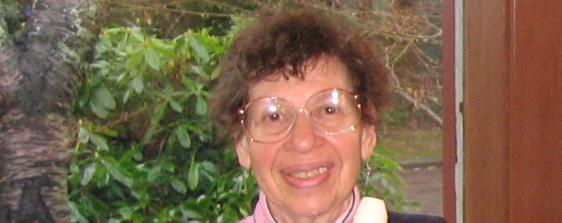
As long as I can remember, I have wanted to put down on paper my life and its memories, its ups and downs, etc. I was born in 1902 in a small town on the Ukrainian side of Russia. Its name is Tolna and its population was close to 100,000. The town had two public schools and a junior high. It had a sugar beet factory, its own municipal building and court room. Also, a well known rabbinical court. The population was 90% Russian peasants and landowners of the better class. We Jews were a minority and most of our livelihood was derived from storekeepers, merchants, and some few small industries, and 1 or 2 doctors and dentists. The Jews lived in the center of town, where business and marketing were active. The peasants lived in the outskirts in the hills and did most of the agriculture and husbandry. The better class Russians, the aristocrats, had big estates. They dealt in wheat, sugar, forestry, etc. They looked down on the peasants, and almost used them for slaves. As Jews, we were not popular either.
Education was free for the Christians. However, the Jews had to pay tuition, and being a minority, were accepted in schools in a small quota, and only with the highest marks. Discrimination and pogroms were not strange to the Jews. We were the brighter, and more aggressive people and therefore we were hated and oppressed.
I was one of six children in a middle to upper class Jewish family. Our parents and grandparents were shopkeepers and we owned a good size department and general store, on Main Street, and were well respected on our community by both Jews and Gentiles.
My father was a scholarly man, well read and educated in Hebrew and Russian. His father came from a rabbinical family, but he himself didn’t practice the rabbinate although he had the qualifications. He was instead a bank manager and accountant of a big Jewish business magnate. My mother, a fair and frail woman, came from a family of merchants. She was the center of the business, and even did the merchandizing abroad and in Warsaw. My father was really not cut out to be a business man, and just carried the name. He would much rather get into deep conversations, political discussions, play chess, read – anything but attend the business. Therefore most of the burden fell to my mother, and her mother, who was a very shrewd business woman and a regular Portia.
Nature being as such, Mother was prolific and produced six children, not counting the many abortions. It was no easy task to be a mother and a business woman at the same time, but duty called. We were fortunate to live in a big house, with servants to help. However we missed a mother. She was always tired and harassed with frequent births and illness. Naturally Mother was not too strong to nurse any of us. So we were given to a wet nurses’ area. We only saw Mother on Shabbas. Father, on the other hand, had more time and patience with us and made up for the love one expects from a mother. He never discriminated and loved us evenly. We were five girls. The oldest, Mania, a striking blue-eyed blond, myself next, a curly-haired rather timid child, two years younger than Mania. I was called Luba. The third, the only son. The apple of the eye. The heir apparent. Named Yankl, 11 months younger than I. The fourth, another sister, Etka, two years younger. Then Ida three years apart, and last but not least, Fania, four years apart, the little accident, but the best of the crop.
We were a very close knit family, especially the five girls. Yankl was a tyrant and ruled the roost. He gave us girls many bad days. I can remember myself from the time I was 3-4 years old. I remember the Russian – Japanese war, the pogroms where I had to be locked away in a cellar inside of a barrel for several days while the danger of the massacre was on.
I didn’t have a very happy start in life, as I was wet-nursed by a poor woman who neglected me pitifully and did not even get me toilet trained. When I finally joined the family I was a stranger, and not even wanted. Besides, another baby in the house took over – the one and only son. He had a Nana who didn’t want to include me in her care. I was only 1 1/2 years old. So I grew up somehow, but with a chip on my shoulders, and with a feeling that I wasn’t loved, especially by my mother. She had favorites. Her oldest and youngest, and of course, the spoiled brat of a brother. As we started school we girls clung together. I was not very bright in school and it made me very nervous to compete with the class. To be a Jew one had to be bright and get good marks. So I had a tutor who coached me in arithmetic, my weak subject.
One thing I can say, that we had a good home life, plenty of the best of foods. One cow, chickens, geese, orchard, etc. And Father was the center of our lives. We used to all pile into his bed and he would read to us and tell us stories, warm up milk, and give us big chunks of chocolate. He had so much patience with us and never laid a finger on us. Mother, on the other hand, was always too tired, and more than a little jealous of our love for Dad. She used to say that she envied a seamstress, as she finishes a day’s work and could leave to be a mother to her children. My mother was always in the business day and night. She so wanted to be a plain mother, and couldn’t. Someone had to carry on the business, as Dad was just not cut out for it even though he tried. When we reached the age when our schools couldn’t give us any higher education, we were sent to Uman, Odessa, or Nikolayev, to board and attend high school. Thank God for Mother’s efforts; we could afford it. And all of us had a liberal education.
In the year of 1916-1917 when the war with Germany started things took a turn for the worse. Business dropped. Pogroms started with every change of government after the assassination of the czar. We Jews suffered untold hardships. Our business was destroyed, pillaged and burned. We had to flee our house and hide with some of our Christian friends to survive. Fortunately for us, my mother had two brothers in America, and they made it possible for us to immigrate to the USA. To tell the hardships we went through during our escape crossing could fill a book. News from American relatives reached us, that if we would somehow escape from Russia to Romania we would be met there by an uncle, Ben, who would then have the proper papers to have us admitted to America.
Leaving Russia was no small matter, as we had to steal across the border which was watched by sentries. Anyone that was caught was shot on sight. There were groups of contrabandists who understood to transfer the immigrants by a small boat for an exorbitant fee. It was very risky as well as costly. We simply had to leave Russia, as by then, Jews were killed right and left, and women raped. We took the chance and spent every cent we were able to scrape up. Naturally we left our properties and belongings behind.
One dark night all of us, parents, six children, and two additional – Manya’s husband and our brother’s sweet new young wife from a nearby town, Shpola – we really began an ordeal. For nights on end we were hidden in caves in the fields watching for the right moment when the guards were away, mostly for a dark rainy night. We had no food or water. We adults managed, but there were groups of people who had young babies, and had to give them some sustenance. We adults used to collect dew for drinking water for the babies. We fed mostly on cherries or other vegetation. The sentries were to be bribed by the contrabandists. The small boats we were eventually piled into were very risky, as at the least move we could topple over and drown. It did happen to many of the groups. We were fortunate to get across. One stormy night God was with us. Some mothers smothered their young ones who began to cry so as not to be discovered. We arrived at a small town across the border called Paschanka. We were roughly lodged at pre-arranged homes, where we remained for some time. Eventually we went to Bucharest, Romania. There a dear uncle awaited us, supplied us with proper papers, lodging, good food and comfort. We stayed in Romania several months where we studied English, fattened up and began to look like human beings.
It was a nice period of vacation and rehabilitation. After six months our uncle was ready with the proper papers and visas. We went by train, and then by boat to Liverpool, England. Eventually we boarded the ship Cedrick, that took us to the promised land. The voyage was rough and practically all of us were sea sick. But when we reached the end of our voyage we all miraculously recovered. The sight of the Statue of Liberty… Here we were at last. Freedom from Oppression. Freedom of Opportunity. There was a slight delay at Ellis Island and off we went, rolling in a brand new Cadillac to the unknown. A new life at the age of 19, in 1921, with the mysteries of what life had in store for us. Tears were in our eyes in gratitude to ones who made the dream possible. Uncles, cousins, we thank you.
A small apartment was obtained to house our parents and minor children. The married couples were given temporary refuge at relatives homes. My sister Itka and I stayed at our Aunt Clara’s. She and her husband had 4 of their own children. We lost no time in starting school for the minors, and work for the adults. I was brought into my uncle Izzy’s department store to learn the language and the Americanese skill of salesmanship. I attended night school for a six week period. My brother found employment in one of our cousin’s hardware stores. My father and my brother-in-law got jobs at Uncle Ben’s shoe store. Izzy, my brother-in-law, proved himself a crackerjack shoe salesman, even though he only knew half a dozen English words. Father took over the bookkeeping. He was very skilled in that field, and ever so good with figures. The three younger children, Etka, Itka, and Fania made rapid progress, starting in the earliest grades and jumping rapidly two grades at a time. Fania who was seven, went through from 2nd grade through high school and part time college. Etka was the brilliant one. She caught up with her class in jumps and leaps, and graduated with honors from Girl’s Commercial High School, at 16. Itka went through high school from 13 to 18. Things got financially much easier for Father, as each of the graduates obtained positions and contributed towards the house maintenance. I too was getting up in my field, as saleslady cashier, buyer and cook.
We were a happy family, and the gatherings we used to have were most inspiring. Not just dancing, but discussions __ music, etc. Our father was in the midst of everything, fitting in like one of us young ones, and giving us full freedom of activity. Mother did a wonderful job of holding us together, cooking, sewing, advising. Gone was the harassed feeling she had while a business woman. She was gentle and understanding. We discovered in her a new personality. She tutored each of us in the German language and tried to keep up with our activities. Her English was way superior to Father’s, as she was now more around her children and learned a lot, also attending night school classes. I wouldn’t be surprised that I got my ability and desire to write from Mother, although Father wrote in the Daily Jewish paper in Hebrew or Yiddish. He wrote witty sayings. If you should come across the Tag of 1940-1950 you’ll find Father’s witticisms under the name Max Odsess.
Pretty soon our family began to multiply. Mania gave birth to a daughter, then a son, and last another daughter. Jack’s wife brought him a daughter and a son. The boy Bernard was the only one to continue the family name.
In the year of 1927 I met a wonderful man who decided to share his life with little me. He was English born, and I Russian – poles apart. But we had English as our common language, and we made a tranquil life for ourselves. God gave us one daughter, who makes up for a dozen. She is married and has brought us two delightful grandchildren. Wendy 11, and Kim 10 years old. My married name is Finclaire, and my husband is a white collar man. He worked for a bank in Boston and Socony Oil. The last job was with a construction company that took us to different parts of the world. Puerto Rico, Jamaica, etc. My husband is now retired and we are comfortably settled in a condominium in Miami Beach.
I can’t say that I’ve had a bad life, except that I was afflicted at the early age of 30 with rheumatoid arthritis. I’m still troubled with it, but am not completely incapacitated. Of course, life could have been a better deal if I were well. But it is all in God’s hands. We just have to learn to live with our afflictions. Fortunately my husband is well at the age of 70 and is a great help to me. We will be celebrating our 39th anniversary and pray that God gives us a few more comfortable years to come. Our hope now is to take a trip to Europe. Especially for my husband to visit his birth land and remaining family. I am now 64. Don’t know what is in store for us here in Miami Beach. Remains to be seen. God be good to us, our children and grandchildren. Amen.